The Hebrew and Greek that is transliterated as “Cain” in English is transliterated as Kaḭ in Ngambay. In a translatory coincidence Kaḭ is very similar to the Ngambay word kain or “to flee” which is what Cain does according to Genesis 4:14. (Source: Andy Warren-Rothlin)
In the Protestant tradition of Mandarin Chinese it is transliterated as Gāiyǐn (该隐) which can be understood as “should hide” or “should be hidden.” (Source: Zetzsche)
In Spanish Sign Language it is translated with a sign that signifies “bad.” (Source: Steve Parkhurst)
The name that is transliterated as “Abel” in English is translated in Finnish Sign Language with the sign signifying “smoke” (referring to his offering mentioned in Genesis 4:4). (Source: Tarja Sandholm)
Following are a number of back-translations as well as a sample translation for translators of Genesis 4:8:
Kankanaey: “When that was so, Cain talked-with his-younger-sibling Abel and said, ‘Let us (dual) go to the mountains.’ When they went-out-of-view, he attacked (lit. suddened) to kill his younger-sibling.” (Source: Kankanaey Back Translation)
Newari: “Then Cain said to his younger brother, Abel — ‘Let’s go to the field.’ Having arrived in the field, Cain attacked his younger brother, Abel, and killed him.” (Source: Newari Back Translation)
Hiligaynon: “One day back-then, Cain said to Abel, ‘Come, we will-go to the farm/field.’ And when they were already there, Cain killed Abel who is his sibling/(brother).” (Source: Hiligaynon Back Translation)
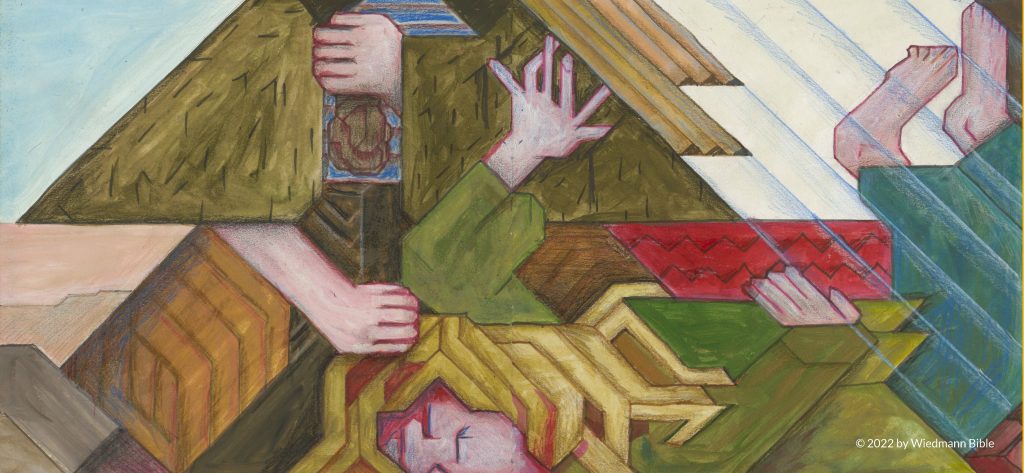
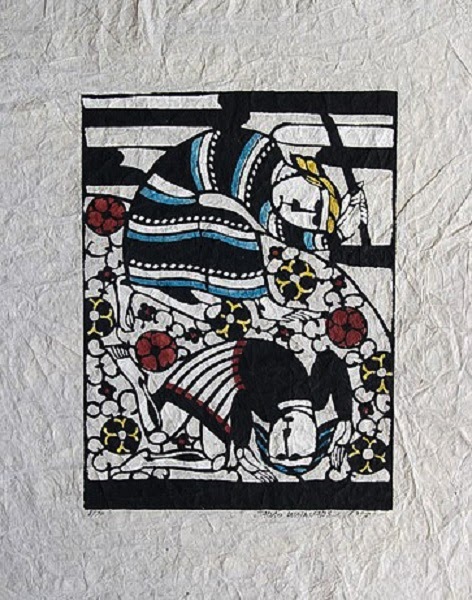
English: “But one day, Cain said to his younger brother Abel, ‘Let’s go for a walk in the fields.’ So they went together. And when they were in the countryside, suddenly Cain attacked Abel and killed him.” (Source: Translation for Translators)
A new episode in the story begins here, which translators will often need to mark in a way that is appropriate in their own languages. And in order to translate the text naturally, a clear picture of the action will be required, with certain details that the text itself does not provide or which are unclear in the text as we have it. What was it that Cain said to Abel? Was he already planning to murder Abel when he spoke to him? How long was it between the time of the conversation and when they went away from the settlement? Where in fact did they go? How long was it from when they got there until Cain murdered his brother? Where was Cain when the LORD spoke to him? And how long was that after the murder? These details may not all have to be incorporated in the story; but many or all of them will have a bearing on the way the story is told.
Cain said to Abel his brother: brother must often be translated by a special term designating “younger brother.”
Let us go out to the field: these words are found in some ancient versions but not in the Hebrew text. See footnotes of Revised Standard Version and Good News Translation. Many interpreters believe that something similar to these words must have dropped out of the Hebrew text. Hebrew Old Testament Text Project is of the opinion that the ancient versions attempt to change or modify the words of the Hebrew text. Accordingly Hebrew Old Testament Text Project suggests this clause be translated “Cain talked to Abel his brother, and it happened that…,” or “When Cain had talked to Abel his brother, it happened…,” and that the words “Let us go out to the field” be placed in a footnote. This suggestion is in line with King James Version, “And Cain talked with his brother Abel: and it came to pass, when they were in the field….” It is also possible, and may be clearer, to follow Revised Standard Version and Good News Translation, including the footnote.
Most translators will realize that the decision taken about what Cain said to Abel will have a strong influence on the story line of the narrative in this verse as a whole. If we decide to follow the ancient versions, as Revised Standard Version, Good News Translation, and others do, most readers will understand that Cain had already determined to kill his brother, and that this was the beginning of his plan to do it. The words of Cain tell us straight out that the brothers went away from where other people were, and then, either immediately or after a period of time, Cain killed his (unsuspecting) brother.
If we decide to follow the advice of Hebrew Old Testament Text Project, however, and reject the words put in Cain’s mouth by the ancient versions, we must still try to guess what it was that Cain said to his brother. And in some languages we may even have to put this into words.
(1) One possibility is that Cain said something angry or abusive to his brother; this would be in keeping with Gen 4.5. If this is the case, it is also quite possible that Cain killed his brother immediately after speaking, in that very place; the place where they made their offerings could very well have been “in the field.” Alternatively some time may have passed between Cain’s angry outburst against his brother and the time when they were “in the field” and the murder was done.
(2) It is also possible that Cain reported to Abel what the LORD had said to him (in verses 6-7). In this case we have to understand that Abel was not present when the LORD was speaking with Cain. And we probably also have to assume that there was a time interval before the brothers were together “in the field,” which would have to be indicated in translation by some transitional expression such as “Then later on, when they were….”
(3) Yet another possibility is that what Cain said to Abel had nothing to do with the situation arising from the offerings; and this could provide an explanation of why the Hebrew text does not give any words. The story line would then be that Cain spoke in a friendly way to his brother at the time, but later on, when they were by themselves “in the field,” he got angry again, or he took the opportunity he had been waiting for, and killed him.
In some languages what Cain said can be expressed indirectly; for instance, “Later Cain asked his brother Abel to go to the bush with him.” In this case the statement also has the function of relocating the participants in the story to where the next action takes place. The Hebrew text does not say directly that Cain and Abel “went” from where they were when Cain spoke to another place where the murder was done. As noted above, it is possible that there was no change of location; but if the story line does involve a move, this may need to be stated directly in some languages.
And when they were in the field: field is the same term used in 2.5, 19, 20; 3.18. The reference is either to the field in contrast to the house, as in Good News Translation “out in the fields,” or to the countryside in contrast to the place where people live and farm, as in Good News Translation Australian edition “the countryside,” and Revised English Bible “the country.” In a number of languages this is most naturally translated as “the bush,” since this term is naturally used to refer to the countryside away from where people live, and it is also often where people make their food gardens. In some translations the term “grassland” is used in a similar sense.
There is no indication in the Hebrew about the interval of time between when Cain spoke with Abel and when he killed him. And how this is handled in translation will depend on the strategy of the story which the translator is following. In one type of strategy, in which the anger of Cain is the dominant emotion, the events may follow one another very quickly. But in other ways of understanding the story, there may be quite long periods of time between the events; one translation, for instance, reflects the habit of people to go away to the bush for gardening as an expedition lasting several days, and says “One day, while they were there in the bush, Cain….”
Rose up against means “attacked, assaulted.” It does not mean that Cain was sitting or lying down before he attacked. Good News Translation says “Cain turned on his brother,” and New English Bible “Cain attacked his brother.” Killed him translates a term that means to cause the death of someone, and to do it with evil intent and by violent means. The definition given in BDB is “with ruthless violence.” New English Bible has “murdered him.” The text does not say what means or weapon Cain used to murder Abel.
Some languages have an idiom very similar to that in Hebrew and naturally use “rise up” or “get up” in the sense of becoming angry or hostile against a person. Other translators may need to use a term or expression that means “to attack” or “to go for.” In some languages care will also need to be taken in the choice of a term for killing: where a number of terms are available, it seems most likely that Cain struck or hit Abel, either with a weapon or with his bare fists, and it is clear that his action was intentional, not accidental. In cases where the term for “kill” is a more general word for “strike” or “hit,” it will be necessary to make clear that the victim actually died as a result.
Quoted with permission from Reyburn, William D. and Fry, Euan McG. A Handbook on Genesis. (UBS Helps for Translators). New York: UBS, 1997. For this and other handbooks for translators see here .

Leave a Reply
You must be logged in to post a comment.