The Hebrew in Psalm 23:2 that is often translated as “still waters” in English is translated as “water at the mouth of a well” in Dan since “the imagery of ‘still water’ is seen as something negative, water that is dirty since it isn’t moving.”
In the Contemporary Chichewa translation (2002/2016) it is translated as “clean/good drinking water.” (Source: Mawu a Mulungu mu Chichewa Chalero Back Translation)
Following are a number of back-translations as well as a sample translation for translators of Psalm 23:2:
Chichewa Contempary Chichewa translation, 2002/2016:
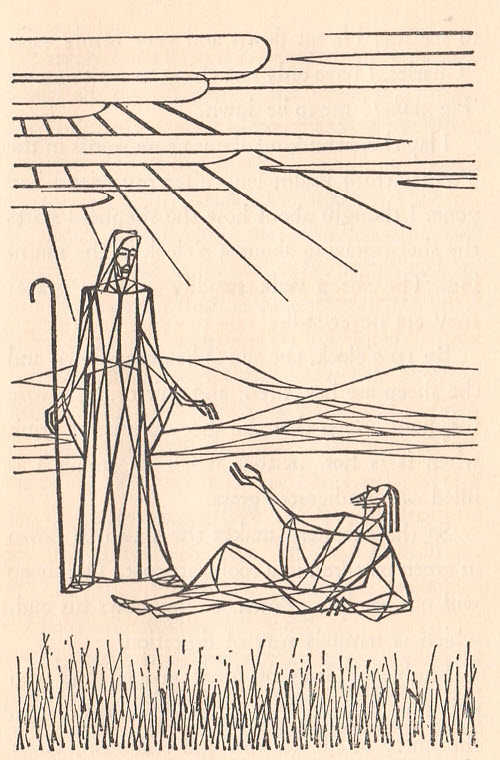
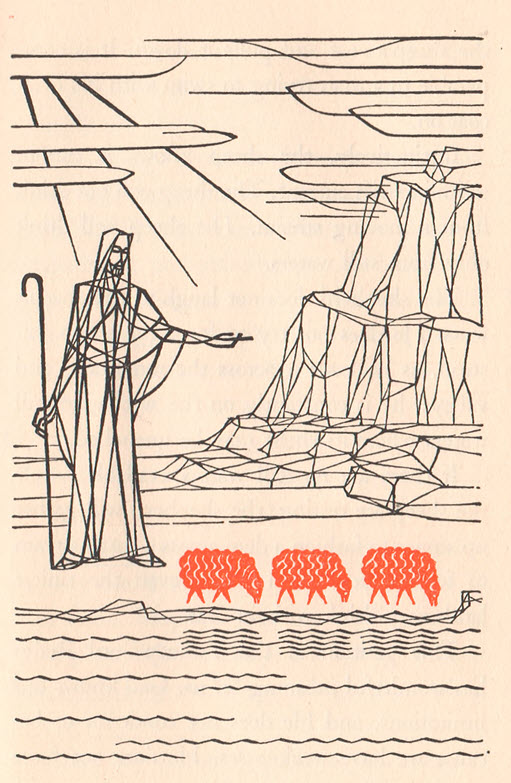
“He lays me in green pastures,
He leads me to clean drinking water,” (Source: Mawu a Mulungu mu Chichewa Chalero Back Translation)
Chichewa interconfessional translation, 1999:
“He lays me down on a pasture of new grass.
He guides me to still waters to go and rest there.” (Source: Wendland 1998, p. 148f.)
Chichewa poetic translation in the traditional ndakatulo genre to encourage oral and musical performances:
“DOWN! [Gonee! — an ideophone, i.e. a literary device that expresses what is perceived by the five senses] on fresh greens he makes me lie down.
[My] resting place is at quiet waters,” (Source: Ernst Wendland)
Kupsabiny:
“He makes me graze where there is green grass, and makes me sleep/lie there.
He leads me to the water that flows in silence.” (Source: Kupsabiny Back Translation)
Adilabad Gondi:
“He (emph.) causes me to lie down in green grass.
He leads me to slow flowing clean/good water.” (Source: Adilabad Gondi Back Translation)
Newari:
“He causes me to lie down in green grass,
He takes me along to ponds of clear water.” (Source: Newari Back Translation)
Hiligaynon:
“I (am) like a sheep that you (sing.) cause- me -to-rest in a pasture which (has) abundant grass
and is-being-led to calm/quiet water(s).” (Source: Hiligaynon Back Translation)
Eastern Bru:
“He leads me to go to a beautiful good place, like a keeper ordinarily leads his sheep to rest in a field of very good green grass, a place that has clear water flowing and is quiet.” (Source: Bru Back Translation)
Laarim:
“He gives me rest in a place where the grass stays good,
he takes me to the place where water stays still,” (Source: Laarim Back Translation)
Nyakyusa-Ngonde (back-translation into Swahili):
“Ananilaza penye nyika penye majani mazuri.
Ananipeleka penye maji mazuri.” (Source: Nyakyusa Back Translation)
English:
“You encourage me
and give me peace;
you are like a shepherd
who leads his sheep to places where there is plenty of green grass for them to eat,
and lets them rest beside streams where the water is flowing slowly.” (Source: Translation for Translators)
David Powlison (1949–2019) once inverted Psalm 23 in English to portray what life feels like and looks like whenever God vanishes from sight. He called it AntiPsalm 23.
I’m on my own.
No one looks out for me or protects me.
I experience a continual sense of need. Nothing’s quite right.
I’m always restless. I’m easily frustrated and often disappointed.
It’s a jungle — I feel overwhelmed. It’s a desert — I’m thirsty.
My soul feels broken, twisted, and stuck. I can’t fix myself.
I stumble down some dark paths.
Still, I insist: I want to do what I want, when I want, how I want.
But life’s confusing. Why don’t things ever really work out?
I’m haunted by emptiness and futility — shadows of death.
I fear the big hurt and final loss.
Death is waiting for me at the end of every road,
but I’d rather not think about that.
I spend my life protecting myself. Bad things can happen.
I find no lasting comfort.
I’m alone . . . facing everything that could hurt me.
Are my friends really friends?
Other people use me for their own ends.
I can’t really trust anyone. No one has my back.
No one is really for me — except me.
And I’m so much all about ME, sometimes it’s sickening.
I belong to no one except myself.
My cup is never quite full enough. I’m left empty.
Disappointment follows me all the days of my life.
Will I just be obliterated into nothingness?
Will I be alone forever, homeless, free-falling into void?
Sartre said, “Hell is other people.”
I have to add, “Hell is also myself.”
It’s a living death,
and then I die.
God transcends gender, but most languages are limited to grammatical gender expressed in pronouns. In the case of English, this is traditionally confined to “he” (or in the forms “his,” “him,” and “himself”), “she” (and “her,” “hers,” and “herself”), and “it” (and “its” and “itself”).
Modern Mandarin Chinese, however, offers another possibility. Here, the third-person singular pronoun is always pronounced the same (tā), but it is written differently according to its gender (他 is “he,” 她 is “she,” and 它/牠 is “it” and their respective derivative forms). In each of these characters, the first (or upper) part defines the gender (man, woman, or thing/animal), while the second element gives the clue to its pronunciation.
In 1930, after a full century with dozens of Chinese translations, Bible translator Wang Yuande (王元德) coined a new “godly” pronoun: 祂. Chinese readers immediately knew how to pronounce it: tā. But they also recognized that the first part of that character, signifying something spiritual, clarified that each person of the Trinity has no gender aside from being God.
While the most important Protestant and Catholic Chinese versions respectively have opted not to use 祂, some Bible translations do and it is widely used in hymnals and other Christian materials. Among the translations that use 祂 to refer to “God” were early versions of Lü Zhenzhong’s (呂振中) version (New Testament: 1946, complete Bible: 1970). R.P. Kramers (in The Bible Translator 1956, p. 152ff. ) explains why later versions of Lü’s translation did not continue with this practice: “This new way of writing ‘He,’ however, has created a minor problem of its own: must this polite form be used whenever Jesus is referred to? Lü follows the rule that, wherever Jesus is referred to as a human being, the normal tā (他) is written; where he is referred to as divine, especially after the ascension, the reverential tā (祂) is used.”
In that system one kind of pronoun is used for humans (male and female alike) and one for natural elements, non-liquid masses, and some spiritual entities (one other is used for large animals and another one for miscellaneous items). While in these languages the pronoun for spiritual entities used to be employed when referring to God, this has changed into the use of the human pronoun.
Lynell Zogbo (in The Bible Translator 1989, p. 401ff. ) explains in the following way: “From informal discussions with young Christians especially, it would appear that, at least for some people, the experience and/or concepts of Christianity are affecting the choice of pronoun for God. Some people explain that God is no longer ‘far away,’ but is somehow tangible and personal. For these speakers God has shifted over into the human category.”
In Kouya, God (the Father) and Jesus are referred to with the human pronoun ɔ, whereas the Holy Spirit is referred to with a non-human pronoun. (Northern Grebo and Western Krahn make a similar distinction.)
Eddie Arthur, a former Kouya Bible translation consultant, says the following: “We tried to insist that this shouldn’t happen, but the Kouya team members were insistent that the human pronoun for the Spirit would not work.”
In Burmese, the pronoun ko taw (ကိုယ်တော်) is used either as 2nd person (you) or 3rd person (he, him, his) reference. “This term clearly has its root in the religious language in Burmese. No ordinary persons are addressed or known by this pronoun because it is reserved for Buddhist monks, famous religious teachers, and in the case of Christianity, the Trinity.” (Source: Gam Seng Shae in The Bible Translator 2002, p. 202ff. )
In Thai, the pronoun phra`ong (พระองค์) is used, a gender-neutral pronoun which must refer to a previously introduced royal or divine being. Similarly, in Northern Khmer, which is spoken in Thailand, “an honorific divine pronoun” is used for the pronoun referring to the persons of the Trinity (source: David Thomas in The Bible Translator 1993, p. 445 ). In Urak Lawoi’, another language spoken in Thailand, the translation often uses tuhat (ตูฮัด) — “God” — ”as a divine pronoun where Thai has phra’ong even though it’s actually a noun.” (Source for Thai and Urak Lawoi’: Stephen Pattemore)
The English “Contemporary Torah” addresses the question of God and gendered pronouns by mostly avoiding pronouns in the first five books of the Hebrew Bible/Old Testament (unless God is referred to as “lord,” “father,” “king,” or “warrior”). It does that by either using passive constructs (“He gave us” vs. “we were given”), by using the adjective “divine” or by using “God” rather than a pronoun.
Some Protestant and Orthodox English Bibles use a referential capitalized spelling when referring to the persons of the Trinity with “He,” “His,” “Him,” or “Himself.” This includes for instance the New American Standard Bible or The Orthodox New Testament, but most translations do not. Two other languages where this is also done (in most Bible translations) are the closely related Indonesian and Malay. In both languages this follows the language usage according to the Qur’an, which in turn predicts that usage (see Soesilo in The Bible Translator 1991, p. 442ff. and The Bible Translator 1997, p. 433ff. ).
“‘The Lord is my shepherd…and I am His sheep — isn’t this the sense in which we understand this phrase as the result of long familiarity with the Twenty-third Psalm? But couldn’t it mean instead, ‘The Lord is the one who herds sheep for me?’ It was in some such sense that a Tlingit interpreter for some of the early missionaries understood it. His interpretation of the opening verses of this Psalm was later translated back again from Tlingit into English like this:
‘The Lord is my goat hunter;
I don’t want Him.
He knocks me down on the mountain:
He drags me down to the beach …
“The Tlingits had no domestic animals, apart from hunting dogs, and a mountain goat was the closest thing they knew to a sheep. Who would think of herding the sure-footed mountain goats? But in the northern limits of the Tlingit area goats could be hunted, so — ‘The Lord is my goat hunter.’
“‘I shall not want’ is not the normal form of expression for a modern speaker of English, and a Tlingit who had newly learned English, when most of his people still spoke nothing but Tlingit. might well be expected to be stumbled by it. ‘I shall not want’ — surely an object must be supplied? Hence the interpretation comes out, ‘I don’t want Him.’
“‘He maketh me to lie down …’ Familiarity with a shepherd’s care for his sheep helps us to understand this, but how would one make a mountain goat lie down? How did ‘green pastures’ become ‘the mountain’? In this area the forests of spruce and hemlock come right down to the water’s edge and at the lower levels are broken only by muskeg swamps or by groups of houses in cleared land. At the higher levels on the mountains there are clearings where the little plant called deer cabbage grows in abundance, the nearest equivalent to a meadow as we know it. So with no knowledge of the pasture or the shepherd comes the statement, ‘He knocks me down on the mountain.’
“‘He leadeth me beside the still waters.’ What happened to this sentence? There is more than one word in Tlingit that could be used to translate the word ‘lead.’ Probably the interpreter used the one that means ‘to lead on a string.’ as a protesting animal might be led. He failed to visualize correctly the picture presented in the Psalm. As for the ‘still waters.’ a little word meaning really ‘down to the water’s edge’ was probably used here. Since the beach is the most common ‘water’s edge’ in this area of coastlands and islands, this was the picture conjured up for the Tlingit listeners: ‘He drags me down to the beach.’”