
The Greek in Matthew 25:32 that is translated as “the sheep from the goats” or similar in English is translated in the German New Testament translation by Berger / Nord (publ. 1999) with die weißen Schafe von den schwarzen Ziegen or “the white sheep from the black goats.” The translators explain: “The usual [traditional German] translation as “ram (Böcke)” [see also the traditional German translation of Beelzebul] is sexist, simplistic and misleading. When juxtaposed with sheep, the word erifos means ‘goats.’ Since the goats in Palestine are black and the sheep are white, the contrast here is between white as the color of the righteous and black as the color of the unrighteous.”
all nations, all the gentiles
The Greek that is translated as “all the gentiles” or “all nations” in English is translated as “all people” in Tzeltal, as “all mankind” in Highland Totonac, or “the peoples who are everywhere” in Chicahuaxtla Triqui. (Source: Waterhouse / Parrott in Notes on Translation October 1967, p. 1ff.)
sheep
“Sheep are known throughout most of the world, even though, as in Central Africa, they are a far cry from the fleecy wool-producing animals of colder climates. Where such animals are known, even by seemingly strange names, e.g. ‘cotton deer’ (Yucateco) or ‘woolly goat’ (Inupiaq), such names should be used. In some instances, one may wish to borrow a name and use a classifier, e.g. ‘an animal called sheep’. In still other instances translators have used ‘animal which produces wool’, for though people are not acquainted with the animals they are familiar with wool.” (Source: Bratcher / Nida)
In Dëne Súline, it is usually translated as “an evil little caribou.” To avoid the negative connotation, a loan word from the neighboring South Slavey was used. (Source: NCEM, p. 70)
Note that the often-alleged Inuktitut translation of “sheep” with “seal” is an urban myth (source Nida 1947, p. 136).
See also lamb and sheep / lamb.
shepherd
The Greek and Hebrew that is translated as “shepherd” in English is translated in Kouya as Bhlabhlɛɛ ‘yliyɔzʋnyɔ — ” tender of sheep.”
Philip Saunders (p. 231) explains:
“Then one day they tackled the thorny problem of ‘shepherd’. It was problematic because Kouyas don’t have herdsmen who stay with the sheep all the time. Sheep wander freely round the village and its outskirts, and often a young lad will be detailed to drive sheep to another feeding spot. So the usual Kouya expression meant a ‘driver of sheep’, which would miss the idea of a ‘nurturing’ shepherd. ‘A sheep nurturer’ was possible to say, but it was unnatural in most contexts. The group came up with Bhlabhlɛɛ ‘yliyɔzʋnyɔ which meant ‘a tender of sheep’, that is one who keeps an eye on the sheep to make sure they are all right. All, including the translators, agreed that this was a most satisfactory solution.”
Other translations include:
- Chuj: “carer” (there was no single word for “shepherd”) (source: Ronald Ross)
- Muna: “sheep guard” (dhagano dhumba) (there was no immediate lexical equivalent) (source: René van den Berg),
- Mairasi: “people who took care of domesticated animals” (source: Enggavoter 2004)
- Noongar: “sheep worker” (kookendjeriyang-yakina) (source: Warda-Kwabba Luke-Ang)
- Kwakum: “those-who-monitor-the-livestock” (source: Stacey Hare in this post )
See also I am the good shepherd, complete verse (Psalm 23:1), and sheep / lamb.
Learn more on Bible Odyssey: Shepherds in the Bible .
complete verse (Matthew 25:32)
Following are a number of back-translations of Matthew 25:32:
- Uma: “All mankind will gather in front of me and I will separate them into two groups, like a shepherd separates sheep from goats.” (Source: Uma Back Translation)
- Yakan: “All the people from all the tribes in the world will gather before me and I will separate them like a person who cares for animals separates the sheep and the goats.” (Source: Yakan Back Translation)
- Western Bukidnon Manobo: “And all mankind will have to come before me, and then I will separate them into two parts like a shepherd separates the sheep from the goats.” (Source: Western Bukidnon Manobo Back Translation)
- Kankanaey: “All people on the earth, they will be gathered before-me, and I will separate them like the way one who takes-care-of animals separates-into-distinct-groups sheep and goats.” (Source: Kankanaey Back Translation)
- Tagbanwa: “And then all people will be gathered in my presence, for I will sort-them-into-groups as is done by a shepherd of/to sheep and goats.” (Source: Tagbanwa Back Translation)
- Tenango Otomi: “All the people on earth will be gathered there where he sits. He will separate each one like a shepherd does when he has goats amidst his sheep.” (Source: Tenango Otomi Back Translation)
pronoun for "God"
God transcends gender, but most languages are limited to grammatical gender expressed in pronouns. In the case of English, this is traditionally confined to “he” (or in the forms “his,” “him,” and “himself”), “she” (and “her,” “hers,” and “herself”), and “it” (and “its” and “itself”).
Modern Mandarin Chinese, however, offers another possibility. Here, the third-person singular pronoun is always pronounced the same (tā), but it is written differently according to its gender (他 is “he,” 她 is “she,” and 它/牠 is “it” and their respective derivative forms). In each of these characters, the first (or upper) part defines the gender (man, woman, or thing/animal), while the second element gives the clue to its pronunciation.
In 1930, after a full century with dozens of Chinese translations, Bible translator Wang Yuande (王元德) coined a new “godly” pronoun: 祂. Chinese readers immediately knew how to pronounce it: tā. But they also recognized that the first part of that character, signifying something spiritual, clarified that each person of the Trinity has no gender aside from being God.
While the most important Protestant and Catholic Chinese versions respectively have opted not to use 祂, some Bible translations do and it is widely used in hymnals and other Christian materials. Among the translations that use 祂 to refer to “God” were early versions of Lü Zhenzhong’s (呂振中) version (New Testament: 1946, complete Bible: 1970). R.P. Kramers (in The Bible Translator 1956, p. 152ff. ) explains why later versions of Lü’s translation did not continue with this practice: “This new way of writing ‘He,’ however, has created a minor problem of its own: must this polite form be used whenever Jesus is referred to? Lü follows the rule that, wherever Jesus is referred to as a human being, the normal tā (他) is written; where he is referred to as divine, especially after the ascension, the reverential tā (祂) is used.”
In Kouya, Godié, Northern Grebo, Eastern Krahn, Western Krahn, and Guiberoua Béte, all languages of the Kru family in Western Africa, a different kind of systems of pronouns is used (click or tap here to read more):
In that system one kind of pronoun is used for humans (male and female alike) and one for natural elements, non-liquid masses, and some spiritual entities (one other is used for large animals and another one for miscellaneous items). While in these languages the pronoun for spiritual entities used to be employed when referring to God, this has changed into the use of the human pronoun.
Lynell Zogbo (in The Bible Translator 1989, p. 401ff. ) explains in the following way: “From informal discussions with young Christians especially, it would appear that, at least for some people, the experience and/or concepts of Christianity are affecting the choice of pronoun for God. Some people explain that God is no longer ‘far away,’ but is somehow tangible and personal. For these speakers God has shifted over into the human category.”
In Kouya, God (the Father) and Jesus are referred to with the human pronoun ɔ, whereas the Holy Spirit is referred to with a non-human pronoun. (Northern Grebo and Western Krahn make a similar distinction.)
Eddie Arthur, a former Kouya Bible translation consultant, says the following: “We tried to insist that this shouldn’t happen, but the Kouya team members were insistent that the human pronoun for the Spirit would not work.”
In Burmese, the pronoun ko taw (ကိုယ်တော်) is used either as 2nd person (you) or 3rd person (he, him, his) reference. “This term clearly has its root in the religious language in Burmese. No ordinary persons are addressed or known by this pronoun because it is reserved for Buddhist monks, famous religious teachers, and in the case of Christianity, the Trinity.” (Source: Gam Seng Shae in The Bible Translator 2002, p. 202ff. )
In Thai, the pronoun phra`ong (พระองค์) is used, a gender-neutral pronoun which must refer to a previously introduced royal or divine being. Similarly, in Northern Khmer, which is spoken in Thailand, “an honorific divine pronoun” is used for the pronoun referring to the persons of the Trinity (source: David Thomas in The Bible Translator 1993, p. 445 ). In Urak Lawoi’, another language spoken in Thailand, the translation often uses tuhat (ตูฮัด) — “God” — ”as a divine pronoun where Thai has phra’ong even though it’s actually a noun.” (Source for Thai and Urak Lawoi’: Stephen Pattemore)
The English “Contemporary Torah” addresses the question of God and gendered pronouns by mostly avoiding pronouns in the first five books of the Hebrew Bible/Old Testament (unless God is referred to as “lord,” “father,” “king,” or “warrior”). It does that by either using passive constructs (“He gave us” vs. “we were given”), by using the adjective “divine” or by using “God” rather than a pronoun.
Some Protestant and Orthodox English Bibles use a referential capitalized spelling when referring to the persons of the Trinity with “He,” “His,” “Him,” or “Himself.” This includes for instance the New American Standard Bible or The Orthodox New Testament, but most translations do not. Two other languages where this is also done (in most Bible translations) are the closely related Indonesian and Malay. In both languages this follows the language usage according to the Qur’an, which in turn predicts that usage (see Soesilo in The Bible Translator 1991, p. 442ff. and The Bible Translator 1997, p. 433ff. ).
See also first person pronoun referring to God.
Learn more on Bible Odyssey: Gender of God .
Translation: Chinese
在现代汉语中,第三人称单数代词的读音都是一样的(tā),但是写法并不一样,取决于性别以及是否有生命,即男性为“他”,女性为“她”,动物、植物和无生命事物为“它”(在香港和台湾的汉语使用,动物则为“牠”)。这些字的部首偏旁表明了性别(男人、女人、动物、无生命事物),而另一偏旁通常旁提示发音。
到1930年为止,基督教新教《圣经》经过整整一百年的翻译已经拥有了十几个译本,当时的一位圣经翻译者王元德新造了一个“神圣的”代词“祂”,偏旁“礻”表示神明。一般汉语读者会立即知道这字的发音是tā,而这个偏旁表示属灵的事物,因此他们明白这个字指出,三位一体的所有位格都没有性别之分,而单单是上帝。
然而,最重要的新教圣经译本(1919年的《和合本》)和天主教圣经译本(1968年的《思高圣经》)都没有采用“祂”;虽然如此,许多其他的圣经译本采用了这个字,另外还广泛出现在赞美诗和其他基督信仰的书刊中。(资料来源:Zetzsche)
《吕振中译本》的几个早期版本也使用“祂”来指称“上帝”;这个译本的《新约》于1946年译成,整部《圣经》于1970年完成。克拉默斯(Kramers)指出:“‘他’的这种新写法(即‘祂’)产生了一个小问题,就是在指称耶稣的时候,是否一律使用这个敬语代词?《吕振中译本》遵循的原则是,在称呼耶稣这个人的时候,用一般的‘他’,而在称呼耶稣神性的时候,特别是升天之后的耶稣,则用尊称‘祂’。”
Translator: Simon Wong
before / in the sight of / presence of (God) (Japanese honorifics)
Click or tap here to see the rest of this insight.
Like a number of other East Asian languages, Japanese uses a complex system of honorifics, i.e. a system where a number of different levels of politeness are expressed in language via words, word forms or grammatical constructs. These can range from addressing someone or referring to someone with contempt (very informal) to expressing the highest level of reference (as used in addressing or referring to God) or any number of levels in-between.
One way to do this is through the usage (or a lack) of an honorific prefix as shown here in the widely-used Japanese Shinkaiyaku (新改訳) Bible of 2017. When the referent is God, the “divine” honorific prefix mi- (御 or み) can be used, as in mi-mae (御前) or “before (God)” in the referenced verses. In some cases in can also be used in reference to being before a king, such as in 1 Samuel 16:16.
(Source: S. E. Doi, see also S. E. Doi in Journal of Translation, 18/2022, p. 37ff. )
See also presence (Japanese honorifics) and before you / to you.
sheep / lamb
Before the time of Abraham at least five breeds of sheep had already been developed in Mesopotamia. From mummified remains (that is, preserved dead bodies) and ancient art it is also known that at least two different breeds had reached Egypt by about 2000 B.C. Thus it is likely that the sheep mentioned in the Bible were of more than one breed.
The Hebrew word kar seems to be used of imported foreign sheep and may refer to a special breed but some scholars think it refers to a wether (castrated ram), since this word is never used in the context of sacrifice. This word is also used for a battering ram, that is, a heavy pole suspended on a rope, used in war for breaking down walls. ’Ayil is the word for a ram or adult male sheep, rachel is a breeding ewe or female sheep, and taleh is a very young lamb, probably still unweaned. The remaining Hebrew words refer to sheep in general.
The Greek word probaton is the general word for sheep, or flocks that may include goats. Krios is the Greek word for a ram or male sheep. Pascha is a technical name for the Passover lamb exclusively, and the remaining Greek words all mean lamb. Ovis is the Latin word for sheep.
Click or tap here for the rest of this entry in United Bible Societies’ All Creatures Great and Small: Living things in the Bible.
The early Hebrews were nomadic shepherds to whom sheep were the most important domestic animal. While goats eat almost any vegetation, sheep are much more selective about the grasses and plants they eat. This meant that suitable grazing for them was not always easy to find, and shepherds had to keep moving their flocks from place to place. This led to a nomadic lifestyle, with movable tents rather than houses being the normal household shelter. It was not until the occupation of Canaan after the Exodus that the lifestyle of the Israelites changed, and they became settled village-dwelling farmers and fruit growers.
However, even then, most households owned sheep, and some family members would function as shepherds, often living away from home for fairly long periods.
Sheep in the Bible were a source of meat, milk, wool, hides, and horns, and it seems likely that various strains were bred selectively to enhance production of these commodities. Wool is mentioned in the Bible as early as the Mosaic Law, which forbade the weaving of cloth containing both wool and plant fibers. The shearing of sheep is mentioned even earlier, in Genesis 31:19. Wool was in fact the most common and available fiber known to the people of Israel.
There was a very extensive wool trade in biblical times, stretching from Egypt to China. In the Middle East wool was cheaper than cotton or linen, which were the other common fibers. (Silk was known by the time of Solomon, but it was extremely expensive as it was produced in China and handled by numerous traders on its way west.) It would be a mistake to think of all wool at that time as being white, as Genesis 30 indicates quite clearly that there were also dark colored sheep and sheep that had dark and light patches, probably varying combinations of black, white, and brown.
We can be fairly sure that one breed of sheep known to the Israelites was the Fat-tailed Sheep Ovis laticaudata and that its fatty tail is referred to in Exodus 29:22, Leviticus 3:9 et al.
Rams’ horns had a variety of uses. Whole ram horns were used as drinking vessels, jars, and trumpets. But pieces of horn were used as handles for knives and other household implements, and for jewelry such as bracelets and beads. Needles too, and probably also arrow heads, were made from horn, as well as from bone and later from bronze and iron.
Sheep were also very important in Israelite religion. They were a very important element in the sacrificial system and in the traditional religious feasts, especially the Feast of Passover.
Sheep and goats belong to the same general family. They differ in that sheep produce wool, which is a special type of soft hair, among the ordinary hairs on their bodies. A ram’s horns too differ in shape from a goat’s horns, those of a ram curling down in a tight spiral beside its face, with those of a goat curving more gently back towards its shoulders. The sheep of biblical times produced much shorter wool than is common with wool-bearing breeds of today.
The fat-tailed or broad-tailed sheep is a smallish breed usually brown and white with a very broad tail. Like most other breeds of sheep in the Middle East it has large floppy ears.
Sheep are generally fairly timid animals, lacking the self-confidence and adaptability of goats. While goats will spread out in their search for food and then regroup without much difficulty, sheep become very insecure when they are separated from other sheep and tend to stay bunched together. They thus require a lot of shepherding. In the Middle East the method of shepherding involves training the dominant ram to follow the shepherd. The remaining sheep then follow this dominant ram, which often wears a wooden clapper or a bell. As they feed, the sheep usually keep within earshot of this sound. It is likely that this method is centuries old.
In most modern breeds only male sheep have horns, but in most ancient breeds female sheep had short horns too. This made separating sheep from goats in a single flock more difficult than it is today.
Of all animals the sheep was the most important for the Israelite nation. It had great religious, social, and economic importance.
In the Bible sheep are a common metaphor for the people of Israel and perhaps for people in general. Like sheep the people are seen as easily going astray (Psalms 119:176; Isaiah 53:6; Jeremiah 50:6; 1 Peter 2:25), as being in need of guidance and protection (1 Kings 22:17; 2 Chronicles 18:16; Matthew 9:36; Mark 6:34), as being very defenseless (Isaiah 52:7), and as being destined to an early death (Psalms 44:22; Jeremiah 12:3; Romans 8:36).
The metaphor of a lamb is used in the New Testament to refer to Christ, with an emphasis on his being a sacrifice for the sin of the world. This is especially the case in John’s gospel and Revelation. In the latter book the metaphor is introduced in a very striking way. In Revelation 5:5 as the writer is mourning the fact that no one can be found to open the scroll, he is comforted by one of the elders who tells him that “the Lion of the tribe of Judah” has triumphed and can thus open the scroll. Then the writer, expecting to see the Lion, sees instead a Lamb that looks as if it has been killed for sacrifice. The remainder of the book is then concerned with describing the triumph of this Lamb over the forces of evil.
In the gospels Jesus also refers to his disciples as “sheep” and “lambs” (Matthew 10:17; John 10:1 et al.).
The metaphor of the shepherd is extended to God himself who is the ultimate “Shepherd of Israel” (Psalms 23:1; 80:1). Then those who are responsible for the nurture, guidance, ruling, and protection of Israel, be it kings, prophets, or priests, are also likened to shepherds (Isaiah 56:11; Jeremiah 23:4; 49:19; Ezekiel 34:2; Zechariah 10:2).
The Messiah is also called a shepherd (Isaiah 40:11), and Jesus refers to himself as “the good shepherd” (John 10:11). In Hebrews 13:20 he is referred to as “the great shepherd of the sheep” and in 1 Peter 2:25 he is called “the Shepherd and Guardian of your lives”.
In languages that have a word for sheep, it is advisable to translate according to the meanings given above. If possible, the feminine forms should be translated as “female lamb” or “female sheep”. In languages in which sheep are not known, a word has usually been coined or borrowed by the time Bible translation begins, and this word should be used. It is not advisable to substitute another locally well-known animal in this case, since doing so negates the ritual and symbolic importance that sheep had for the biblical cultures.
In translating Psalms 23:1 it is extremely important to make sure that the phrase “my shepherd” preserves the relationship intended by the writer and reflects the psalmist’s theme that Yahweh is his benefactor, protector, and guide. There are really two metaphors involved in the opening verse-the caring shepherd (God) and by clear implication, the dependent sheep (the psalmist). In many languages the literal phrase “my shepherd” depicts a wrong relationship, meaning something like “the one who looks after my sheep” or “the one I employ to watch my sheep.” In many African languages unwary translators have produced a rendering that means “The Chief is (nothing more than) my herdsman.” It is often necessary to restructure the whole verse as something like “I am a sheep, and the lord is my shepherd.”
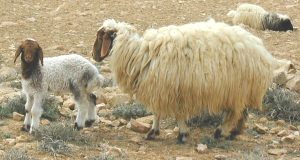
Source: All Creatures Great and Small: Living things in the Bible (UBS Helps for Translators)
Leave a Reply
You must be logged in to post a comment.