bread, loaf

The Greek term that is translated in English as “bread” or “loaf” is translated in Samo, it is translated as “Sago,” which serves “like ‘bread’ for the Hebrews, as a generic for food in the Samo language. It is a near-perfect metonymy that has all the semantic elements necessary for effective communication.” (Source: Daniel Shaw in Scriptura 96/2007, p. 501ff.)

In Chol it is translated as waj, the equivalent of a tortilla. (Click or tap here to see the rest of this insight)

John Beekman (in The Bible Translator 1962, p. 180f. ) explains: “The word ‘bread’ in Scripture primarily occurs as either a specific term for bread (including the Lord’s Supper), or as a generic term for food. It is not surprising, however, the some aboriginal groups use something other than bread as the staff of life. The Chols, with their cultural focus in the cultivation of corn, use waj, a type of thin corn flake. Since a meal is not complete without this main item of food, the term has been extended to include any other foods which may be served along with waj. While bread is known to them, its use is limited to a few occasions during the year when it functions as a dessert. In translating this term in the Chol New Testament, consistent use has been made of the word waj whenever the function of bread as a basic food was in focus. John 6:35, “I am the bread of life,” was thus translated with this word. If the word for bread had been used, it was feared that the Chol would compare Christ to the desirable, but not absolutely necessary, dessert.”

Robert Bascom adds his thoughts to this in relation to other Mayan languages (in Omanson 2001, p. 260): “In many Mayan languages, ‘bread’ can be translated waj or kaxlan waj. The first term literally means anything made from corn meal, while the second term literally means ‘foreigner’s waj,’ and refers to the local wheat-based sweet breads which are so popular within the broader European-influenced culture of the region. On the one hand, waj would be a better dynamic equivalent in cases where ‘bread’ meant ‘food,’ but in cases where the focus is literal or the reference well-known, kaxlan waj would preserve a flour-based meaning (though in biblical times barley was more in use than wheat) and not insert corn into a time and place where it does not belong. On the other hand kaxlan waj is not the staff of life, but refers to a local delicacy. In cases such as these, it is even tempting to suggest borrowing pan, the Spanish word for ‘bread,’ but native speakers might respond that borrowing a foreign word is not necessary since both waj and kaxlan waj are native terms that cover the meaning (though in this case, perhaps not all that well).”

In Mairasi it is translated bread tubers. Tubers are the main food staple and are therefore synonymous with food. (Source: Enggavoter 2004). In Yagaria, Kâteand Yabem it is translated as “taro cake.” (Source: Renck, p. 101)
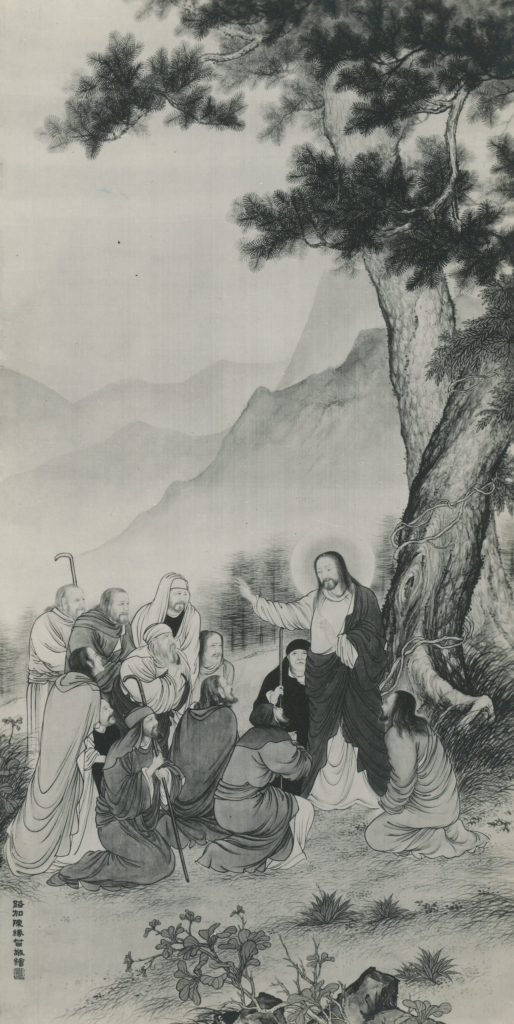
staff, walking stick

The Greek that is translated as “staff” or “walking stick” in English is translated in Noongar as boorn-yaniny or “wood-walking” (source: Warda-Kwabba Luke-Ang).

Mark 6:7-13 in Mexican Sign Language

Following is the translation of Mark 6:7-13 into Mexican Sign Language with back-translations into Spanish and English underneath:


© La Biblia en LSM / La Palabra de Dios

Retrotraducciones en español (haga clic o pulse aquí)

Jesús sabía que las personas no creían y se fue a otro pueblo, iba de lugar a lugar y enseñaba.

Jesús llamó todos los doce discípulos a que vinieran.

Jesús dijo: “Yo les doy la autoridad a que uds se vayan dos en dos a la gente que tiene adentro demonios, y que uds, los discípulos, expulsen los demonios.”

Jesús les advertía: “Cuando uds se vayan, no lleven ropa, chamarra ni pan en una bolsa, ni lleven dinero, nada de eso.

Uds pueden llevar un bastón para caminar y ropa y sandalias puestas.

También uds discípulos, si van a una casa quedense allá, y cuando salgan de allá para predicar regresen al mismo lugar, vayan y regresen y después cuando terminen, vayanse del pueblo.

Si los dos de uds van a un pueblo para predicar y las personas no quieren verlos, los rechazan y no los aceptan y los expulsan, entonces uds, los discípulos, digan: ‘Uds veanme y sean testigos’ y sacudan sus sandalias, quitando el polvo, y vayanse.”

Y Jesús advirtió: “Yo les digo la verdad, en el futuro en el día de juicio Sodoma y Gomorra serán castigados menos que este pueblo recien mencionado, que será castigado más fuertemente.”

Los discípulos estaban de acuerdo y se fueron dos en dos, iban a predicar que todas las personas deben arrepentirse.

Algunas personas tenían demonios adentro y los discípulos expulsaban los demonios, y ungían muchas personas enfermas con aceite, frotandolo en su cuerpo, y las personas fueron sanados.


Jesus knew that the people did not believe and he went to another village, he went from place to place teaching.

Jesus told all the twelve disciples to come to him.

Jesus said: “I give you the authority to go two by two to people who have demons inside and that you, the disciples, can throw out the demons.”

Jesus warned them: “When you go, don’t take clothes, a coat or bread in a bag, nor money in your pocket, none of that.

“You can take a walking stick with you and clothes and sandals that you have on.

“Also, you disciples, if you go to a house stay there, and when you leave there to preach, go back to the same place, go and come, and afterwards when you’re done, leave the village.

“If the two of you go to a village to preach and the people don’t want to see you, reject you and don’t accept you and throw you out, then you, the disciples, should say: ‘Watch me and be witnesses’ and shake the dirt off your sandals and go away.”

And Jesus warned: “I tell you the truth, in the future on the day of judgment, Sodom and Gomorrah will be punished less than that aforementioned village, which will be punished more strongly.”

The disciples agreed and they went two by two, they went out to preach that all the people had to repent.

Some people had demons inside and the disciples threw out the demons, and the disciples anointed many ill people with oil, rubbing the oil on their bodies, and they were healed.

Source: La Biblia en LSM / La Palabra de Dios

<< Mark 6:1-6 in Mexican Sign Language
Mark 6:17-29 in Mexican Sign Language >>

Mark 6:7-13 in Russian Sign Language

Following is the translation of Mark 6:7-13 into Russian Sign Language with a back-translation underneath:


Source: Russian Bible Society / Российское Библейское Общество

Jesus called 12 disciples to Himself. He divided them into two and told them to go to different places to tell people that they needed to change their lives and be reconciled to God.

Jesus said to the disciples:

— I give you authority. If you see a person possessed by demons, you have authority to cast the demons out of that person. You can take only two things with you — sandals and a staff. You don’t need to take four things with you such as bread, a bag, money, and spare clothes. You do not need to take any of these things with you. If you see that the owners of the house call you to their house to hear the word, go in there and be there until the end: teach, fellowship with them. You don’t need to go to another place and teach them until you finish the matter, then only can you go to another place.

If you go and people in some house do not want to hear about God, they will drive you out, then calmly go away from there. Shake the dust off your sandals as a sign that God will punish those people in the future.

The twelve disciples listened and went to different places two by two.

Jesus’ disciples said to the people:

— Change your life! Make peace with God!

The other disciples cast out demons if there were people possessed by evil spirits in that place. The evil spirits obeyed and left. Some of the disciples came across people who were sick with various illnesses; they put oil on them and healed them; they became well.

Original Russian back-translation (click or tap here):

Иисус призвал к себе 12 учеников. Разделил их по два человека и велел им идти по разным местам, чтобы рассказывать людям о том, что они должны изменить свою жизнь и примириться с Богом.

Иисус сказал ученикам:

— Я даю вам власть. Если вы увидите человека, одержимого бесами, вы имеете власть, изгнать бесов из этого человека. Вы можете взять с собой только две вещи — сандалии и посох. Не нужно брать с собой такие четыре вещи: хлеб, сумку, деньги и запасную одежду. Ничего этого брать с собой не нужно. Если вы увидите, что хозяева дома зовут вас к себе, чтобы послушать слово, заходите туда и будьте там до конца: учите, общайтесь с ними. Не нужно переходить в другое место и учите их, пока не закончите дело, тогда только можете переходить в другое место.

Если вы будете идти, а люди в каком-то доме не захотят слушать о Боге, будут вас выгонять, тогда спокойно уходите оттуда. С сандалий стряхните пыль, это будет знаком, что в будущем Бог накажет этих людей.

Двенадцать учеников послушали и разошлись по разным местам по два человека.

Ученики Иисуса говорили людям:

— Измените свою жизнь! Примиритесь с Богом!

Другие ученики изгоняли бесов, если в том месте были одержимые злыми духами. Злые духи повиновались и уходили. Некоторым ученикам попадались больные с различными болезнями; ученики таких людей мазали маслом и исцеляли; те становились здоровыми.

Back-translation by Luka Manevich

<< Mark 6:1-6 in Russian Sign Language
Mark 6:14-29 in Russian Sign Language >>

complete verse (Mark 6:8)

Following are a number of back-translations of Mark 6:8:

  • Uma: “Before they left, he taught them like this: ‘Don’t take anything on your trip, just a walking stick. Don’t take food or a food-bundle or money in your wallet.” (Source: Uma Back Translation)
  • Yakan: “And he instructed them that they should not take along anything (lit. whatever) on their journey. They should not take food or a bag for putting (things) in or money in their belts. Only a walking-stick they could take.” (Source: Yakan Back Translation)
  • Western Bukidnon Manobo: “He commanded them that while they were traveling they must only take a walking stick. They should not carry food, a bag, or even money.” (Source: Western Bukidnon Manobo Back Translation)
  • Kankanaey: “and he instructed them saying, ‘Don’t be taking anything with you on your trip (lit. walking), only a walking-stick. Don’t be taking-along food, backpack, and money.” (Source: Kankanaey Back Translation)
  • Tagbanwa: “Before he caused them to go, he instructed them that they weren’t to take any provisions for their trip. They weren’t to take food, money, and even a container for what would be given to them. Only a walking-stick was to be taken.” (Source: Tagbanwa Back Translation)

Translation commentary on Mark 6:8 – 6:9

Exegesis:

kai parēggeilen autois hina ‘and he commanded them that…’: as in previous cases (cf. 5.18) hina ‘that’ does not indicate purpose, but the content of the command.

paraggellō (8.6) ‘give orders,’ ‘command.’

eis hodon ‘in the road,’ i.e. ‘for the journey.’

ei mē rabdon monon ‘except a staff only,’ not ‘except (for) one staff’: monon ‘only’ is an adverb (cf. 5.36), not an adjective, and modifies ei mē ‘except,’ ‘but.’

rabdos (only here in Mark) ‘staff,’ ‘rod’ used in traveling.

pēran (only here in Mark) ‘knapsack,’ ‘traveler’s bag’: here, more explicitly, a beggar’s bag. Lagrange points out it would be pointless to prohibit taking a bag for provisions when the taking of bread had already been forbidden.

mē eis tēn zōnēn chalkon ‘no money in their belts.’

zōnē (cf. 1.6) ‘girdle,’ ‘belt.’

chalkos (12.41) ‘copper,’ ‘brass’; ‘copper coin’; ‘money.’

In verse 9 the construction changes: instead of clauses governed by hina ‘that’ as in v. 8, there is one participial clause which is the direct object of the verb ‘he commanded,’ and one clause which is in the form of direct speech. For purposes of translation, however, there is no need literally to reproduce the Greek grammatical constructions; the content, not the form, is what matters.

alla hupodedemenous sandalia ‘but to wear sandals’ (i.e. rather than go barefooted).

hupodeomai (only here in Mark; cf. hupodēma 1.7) ‘bind under’: of sandals, ‘to put on,’ ‘to wear.’

sandalion (only here in Mark) ‘sandal’ (a synonym of hupodēma in 1.7).

kai mē endusēsthe duo chitōnas ‘and do not wear two tunics.’

enduō (cf. 1.6) ‘put on,’ ‘wear.’

chitōn (14.63; cf. himation 2.21) ‘tunic,’ ‘shirt,’ worn next to the skin: the command not to wear two tunics meant that one only was sufficient.

Translation:

Verses 8 and 9 present serious problems for translators because (1) the grammatical form shifts in the middle of the passage, from an indirect to a direct form, and (2) there are two awkward exceptions: the staff is an exception in what should be carried, and the extra tunic is forbidden in an otherwise positive command, i.e. to wear sandals and one tunic. This means that in a number of translations this passage must be recast to fit the requirements of the receptor language.

Charged them to take … may be altered in many languages into a form of direct command, for this greatly simplifies the syntactic problems in the rest of the passage, e.g. ‘he commanded them, Do not take….’

In verse eight there is a shift from negative to positive and again to negative in the Revised Standard Version order: nothing … except a staff; no …. In many languages this would be clearer if the exception to the negation were placed at the end, e.g. ‘do not take anything for your journey: do not take bread, a bag, or money in your girdles, take only a walking stick.’ In some languages (Southern Bobo Madaré), however, the positive would normally precede the negative, e.g. ‘take a stick in your hand, do not take anything else….’

Put on two tunics is equivalent in many instances to ‘wear two shirts.’ As Arndt and Gingrich point out the wearing of two tunics was a sign of effeminacy.

Quoted with permission from Bratcher, Robert G. and Nida, Eugene A. A Handbook on the Gospel of Mark. (UBS Handbook Series). New York: UBS, 1961. For this and other handbooks for translators see here .