
The Hebrew that is typically translated as “guilt offering” in English is translated in Chol as “offerings for responsibility for sinning as well as for sinning itself.”
atonement
The Greek and Hebrew that is usually translated in English as “atonement” is translated in Luchazi with minina mata: “to swallow another’s spittle.” “The human bite [is traditionally thought of] as being the most poisonous and dangerous and the poison lies in the saliva. So in swallowing another’s spittle, one takes into oneself all the poison or evil of the other and thus actually ‘becomes sin’ on behalf of the other. The substitute then proceeds to deal with the case as though he were the guilty one.” (Source: E. Pearson in The Bible Translator 1954, p. 160ff. )
See also propitiation / atoning sacrifice and sacrifice of atonement / expiation / propitiation.
priest
The Hebrew, Aramaic, and Greek that are typically translated as “priest” in English (itself deriving from Latin “presbyter” — “elder”) is often translated with a consideration of existing religious traditions. (Click or tap for details)
Bratcher / Nida (1961) say this:
“However, rather than borrow local names for priests, some of which have unwanted connotations, a number of translations have employed descriptive phrases based on certain functions: (1) those describing a ceremonial activity: Pamona uses tadu, the priestess who recites the litanies in which she describes her journey to the upper or under-world to fetch life-spirit for sick people, animals or plants; Batak Toba uses the Arabic malim, ‘Muslim religious teacher;’ ‘one who presents man’s sacrifice to God’ (Bambara, Eastern Maninkakan), ‘one who presents sacrifices’ (Baoulé, Navajo (Dinė)), ‘one who takes the name of the sacrifice’ (Kpelle, and ‘to make a sacrifice go out’ (Hausa); (2) those describing an intermediary function: ‘one who speaks to God’ (Shipibo-Conibo) and ‘spokesman of the people before God’ (Tabasco Chontal).”
In Obolo it is translated as ogwu ngwugwa or “the one who offers sacrifice” (source: Enene Enene), in Mairasi as agam aevar nevwerai: “religious leader” (source: Enggavoter 2004), in Ignaciano as “blesser, one who does ritual as a practice” (using a generic term rather than the otherwise common Spanish loan word sacerdote) (source: Willis Ott in Notes on Translation 88/1982, p. 18ff.), and in Noongar as yakin-kooranyi or “holy worker” (source: Warda-Kwabba Luke-Ang).
For Guhu-Samane, Ernest Richert (in The Bible Translator, 1965, p. 81ff. ) reports this: “The [local] cult of Poro used to be an all-encompassing religious system that essentially governed all areas of life. (…) For ‘priest’ the term ‘poro father’ would at first seem to be a natural choice. However, several priests of the old cult are still living. Although they no longer function primarily as priests of the old system they still have a substantial influence on the community, and there would be more than a chance that the unqualified term would (in some contexts particularly) be equated with the priest of the poro cult. We learned, then, that the poro fathers would sometimes be called ‘knife men’ in relation to their sacrificial work. The panel was pleased to apply this term to the Jewish priest, and the Christian community has adopted it fully. [Mark 1:44, for instance, now] reads: ‘You must definitely not tell any man of this. But you go show your body to the knife man and do what Moses said about a sacrifice concerning your being healed, and the cause (base of this) will be apparent.'”
For a revision of the 1968 version of the Bible in Khmer Joseph Hong (in: The Bible Translator 1996, 233ff. ) talks about a change in wording for this term:
Bau cha r (បូជាចារ្យ) — The use of this new construction meaning “priest” is maintained to translate the Greek word hiereus. The term “mean sang (មាន សង្ឃ)” used in the old version actually means a “Buddhist monk,” and is felt to be theologically misleading. The Khmer considers the Buddhist monk as a “paddy field of merits,” a reserve of merits to be shared with other people. So a Khmer reader would find unthinkable that the mean sang in the Bible killed animals, the gravest sin for a Buddhist; and what a scandal it would be to say that a mean sang was married, had children, and drank wine.
See also idolatrous priests.
forgive, forgiveness
The concept of “forgiveness” is expressed in varied ways through translations. Following is a list of (back-) translations from some languages:
- Tswa, North Alaskan Inupiatun, Panao Huánuco Quechua: “forget about”
- Navajo (Dinė): “give back” (based on the idea that sin produces an indebtedness, which only the one who has been sinned against can restore)
- Huichol, Shipibo-Conibo, Eastern Highland Otomi, Uduk, Tepo Krumen: “erase,” “wipe out,” “blot out”
- Highland Totonac, Huautla Mazatec: “lose,” “make lacking”
- Tzeltal: “lose another’s sin out of one’s heart”
- Lahu, Burmese: “be released,” “be freed”
- Ayacucho Quechua: “level off”
- Yatzachi Zapotec: “cast away”
- Chol: “pass by”
- Wayuu: “make pass”
- Kpelle: “turn one’s back on”
- Chicahuaxtla Triqui: “cover over” (a figure of speech which is also employed in Hebrew, but which in many languages is not acceptable, because it implies “hiding” or “concealment”)
- Tabasco Chontal, Huichol: “take away sins”
- Toraja-Sa’dan, Javanese: “do away with sins”
- San Blas Kuna: “erase the evil heart” (this and all above: Bratcher / Nida, except Tepo Krumen: Peter Thalmann in Holzhausen / Riderer 2010, p. 25f.)
- Eggon: “withdraw the hand”
- Mískito: “take a man’s fault out of your heart” (source of this and the one above: Kilgour, p. 80)
- Western Parbate Kham: “unstring someone” (“hold a grudge” — “have someone strung up in your heart”) (source: Watters, p. 171)
- Hawai’i Creole English: “let someone go” (source: Jost Zetzsche)
- Cebuano: “go beyond” (based on saylo)
- Iloko: “none” or “no more” (based on awan) (source for this and above: G. Henry Waterman in The Bible Translator 1960, p. 24ff. )
- Tzotzil: ch’aybilxa: “it has been lost” (source: Aeilts, p. 118)
- Suki: biaek eisaemauwa: “make heart soft” (Source L. and E. Twyman in The Bible Translator 1953, p. 91ff. )
- Warao: “not being concerned with him clean your obonja.” Obonja is a term that “includes the concepts of consciousness, will, attitude, attention and a few other miscellaneous notions” (source: Henry Osborn in The Bible Translator 1969, p. 74ff. See other occurrences of Obojona in the Warao New Testament.)
- Martu Wangka: “throw out badness” (source: Carl Gross)
- Mairasi: “dismantle wrongs” (source: Enggavoter 2004)
- Nyulnyul: “have good heart” (source )
- Kyaka: “burn the jaw bones” — This goes back to the pre-Christian custom of hanging the jaw bones of murdered relatives on ones door frame until the time of revenge. Christians symbolically burned those bones to show forgiveness which in turn became the word for “forgiveness” (source: Eugene Nida, according to this blog )
- Koonzime: “remove the bad deed-counters” (“The Koonzime lay out the deeds symbolically — usually strips of banana leaf — and rehearse their grievances with the person addressed.”) (Source: Keith and Mary Beavon in Notes on Translation 3/1996, p. 16)
- Ngbaka: ele: “forgive and forget” (Margaret Hill [in Holzhausen & Ridere 2010, p. 8f.] recalls that originally there were two different words used in Ngbaka, one for God (ɛlɛ) and one for people (mbɔkɔ — excuse something) since it was felt that people might well forgive but, unlike God, can’t forget. See also this lectionary in The Christian Century .
- Amahuaca: “erase” / “smooth over” (“It was an expression the people used for smoothing over dirt when marks or drawings had been made in it. It meant wiping off dust in which marks had been made, or wiping off writing on the blackboard. To wipe off the slate, to erase, to take completely away — it has a very wide meaning and applies very well to God’s wiping away sins, removing them from the record, taking them away.”) (Source: Robert Russel, quoted in Walls / Bennett 1959, p. 193)
- Gonja / Dangme: “lend / loan” (in the words of one Dangme scholar: “When you sin and you are forgiven, you forget that you have been forgiven, and continue to sin. But when you see the forgiveness as a debt/loan which you will pay for, you do not continue to sin, else you have more debts to pay” — quoted in Jonathan E.T. Kuwornu-Adjaottor in Ibadan Journal of Religious Studies 17/2 2010, p. 67ff. )
- Kwere: kulekelela, meaning literally “to allow for.” Derived from the root leka which means “to leave.” In other words, forgiveness is leaving behind the offense in relationship to the person. It is also used in contexts of setting someone free. (Source: Megan Barton)
- Merina Malagasy: mamela or “leave / let go (of sin / mistakes)” (source: Brigitte Rabarijaona)
See also this devotion on YouVersion .
sin
The Hebrew and Greek that is typically translated as “sin” in English has a wide variety of translations.
The Greek ἁμαρτάνω (hamartanō) carries the original verbatim meaning of “miss the mark” and likewise, many translations contain the “connotation of moral responsibility.”
- Loma: “leaving the road” (which “implies a definite standard, the transgression of which is sin”)
- Navajo (Dinė): “that which is off to the side” (source for this and above: Bratcher / Nida)
- Toraja-Sa’dan: kasalan, originally meaning “transgression of a religious or moral rule” and in the context of the Bible “transgression of God’s commandments” (source: H. van der Veen in The Bible Translator 1950, p. 21ff. )
- Kaingang: “break God’s word”
- Bariai: “bad behavior” (source: Bariai Back Translation)
- Sandawe: “miss the mark” (like the original meaning of the Greek term) (source for this and above: Ursula Wiesemann in Holzhausen / Riderer 2010, p. 36ff., 43)
In Shipibo-Conibo the term is hocha. Nida (1952, p. 149) tells the story of its choosing: “In some instances a native expression for sin includes many connotations, and its full meaning must be completely understood before one ever attempts to use it. This was true, for example, of the term hocha first proposed by Shipibo-Conibo natives as an equivalent for ‘sin.’ The term seemed quite all right until one day the translator heard a girl say after having broken a little pottery jar that she was guilty of ‘hocha.’ Breaking such a little jar scarcely seemed to be sin. However, the Shipibos insisted that hocha was really sin, and they explained more fully the meaning of the word. It could be used of breaking a jar, but only if the jar belonged to someone else. Hocha was nothing more nor less than destroying the possessions of another, but the meaning did not stop with purely material possessions. In their belief God owns the world and all that is in it. Anyone who destroys the work and plan of God is guilty of hocha. Hence the murderer is of all men most guilty of hocha, for he has destroyed God’s most important possession in the world, namely, man. Any destructive and malevolent spirit is hocha, for it is antagonistic and harmful to God’s creation. Rather than being a feeble word for some accidental event, this word for sin turned out to be exceedingly rich in meaning and laid a foundation for the full presentation of the redemptive act of God.”
In Warao it is translated as “bad obojona.” Obojona is a term that “includes the concepts of consciousness, will, attitude, attention and a few other miscellaneous notions.” (Source: Henry Osborn in The Bible Translator 1969, p. 74ff. ). See other occurrences of Obojona in the Warao New Testament.
Martin Ehrensvärd, one of the translators for the Danish Bibelen 2020, comments on the translation of this term: “We would explain terms, such that e.g. sin often became ‘doing what God does not want’ or ‘breaking God’s law’, ‘letting God down’, ‘disrespecting God’, ‘doing evil’, ‘acting stupidly’, ‘becoming guilty’. Now why couldn’t we just use the word sin? Well, sin in contemporary Danish, outside of the church, is mostly used about things such as delicious but unhealthy foods. Exquisite cakes and chocolates are what a sin is today.” (Source: Ehrensvärd in HIPHIL Novum 8/2023, p. 81ff. )
See also sinner.
complete verse (Leviticus 5:16)
Following are a number of back-translations as well as a sample translation for translators of Leviticus 5:16:
- Kupsabiny: “The person pays the things it was needed to take/offer to God and adds to that twenty in a hundred of those he should have paid. He is to give those things to the priest so he can take the ram that the person brought for his sin and make sacrifices which appease the sin of that person. Then that person will be forgiven.” (Source: Kupsabiny Back Translation)
- Newari: “If anyone makes a mistake in the way he must bring an offering to the LORD, he must pay compensation for it in this way. He must increase the value by one-fifth. He must bring it all and the ram as a guilt offering to the priest. The priest will make atonement for them by offering a ram as guilt offering for his sin, then he will have forgiveness.” (Source: Newari Back Translation)
- Hiligaynon: “He must pay for what he did- not -give to the LORD, and he is- yet -to-add 20 percent of its value. Then he is-to-give this all to the priest who will-be-the-one to-offer the sheep for him to-be-redeemed from his sin and the LORD will-forgive him.” (Source: Hiligaynon Back Translation)
- English: “But you must also make restitution for what you failed to give to Yahweh, adding one-fifth of its value. You must give that to the priest. He will offer the ram as a sacrifice for the sin that you have committed, and cause you to no longer be guilty; and you will be forgiven.” (Source: Translation for Translators)
sheep / lamb
Before the time of Abraham at least five breeds of sheep had already been developed in Mesopotamia. From mummified remains (that is, preserved dead bodies) and ancient art it is also known that at least two different breeds had reached Egypt by about 2000 B.C. Thus it is likely that the sheep mentioned in the Bible were of more than one breed.
The Hebrew word kar seems to be used of imported foreign sheep and may refer to a special breed but some scholars think it refers to a wether (castrated ram), since this word is never used in the context of sacrifice. This word is also used for a battering ram, that is, a heavy pole suspended on a rope, used in war for breaking down walls. ’Ayil is the word for a ram or adult male sheep, rachel is a breeding ewe or female sheep, and taleh is a very young lamb, probably still unweaned. The remaining Hebrew words refer to sheep in general.
The Greek word probaton is the general word for sheep, or flocks that may include goats. Krios is the Greek word for a ram or male sheep. Pascha is a technical name for the Passover lamb exclusively, and the remaining Greek words all mean lamb. Ovis is the Latin word for sheep.
Click or tap here for the rest of this entry in United Bible Societies’ All Creatures Great and Small: Living things in the Bible.
The early Hebrews were nomadic shepherds to whom sheep were the most important domestic animal. While goats eat almost any vegetation, sheep are much more selective about the grasses and plants they eat. This meant that suitable grazing for them was not always easy to find, and shepherds had to keep moving their flocks from place to place. This led to a nomadic lifestyle, with movable tents rather than houses being the normal household shelter. It was not until the occupation of Canaan after the Exodus that the lifestyle of the Israelites changed, and they became settled village-dwelling farmers and fruit growers.
However, even then, most households owned sheep, and some family members would function as shepherds, often living away from home for fairly long periods.
Sheep in the Bible were a source of meat, milk, wool, hides, and horns, and it seems likely that various strains were bred selectively to enhance production of these commodities. Wool is mentioned in the Bible as early as the Mosaic Law, which forbade the weaving of cloth containing both wool and plant fibers. The shearing of sheep is mentioned even earlier, in Genesis 31:19. Wool was in fact the most common and available fiber known to the people of Israel.
There was a very extensive wool trade in biblical times, stretching from Egypt to China. In the Middle East wool was cheaper than cotton or linen, which were the other common fibers. (Silk was known by the time of Solomon, but it was extremely expensive as it was produced in China and handled by numerous traders on its way west.) It would be a mistake to think of all wool at that time as being white, as Genesis 30 indicates quite clearly that there were also dark colored sheep and sheep that had dark and light patches, probably varying combinations of black, white, and brown.
We can be fairly sure that one breed of sheep known to the Israelites was the Fat-tailed Sheep Ovis laticaudata and that its fatty tail is referred to in Exodus 29:22, Leviticus 3:9 et al.
Rams’ horns had a variety of uses. Whole ram horns were used as drinking vessels, jars, and trumpets. But pieces of horn were used as handles for knives and other household implements, and for jewelry such as bracelets and beads. Needles too, and probably also arrow heads, were made from horn, as well as from bone and later from bronze and iron.
Sheep were also very important in Israelite religion. They were a very important element in the sacrificial system and in the traditional religious feasts, especially the Feast of Passover.
Sheep and goats belong to the same general family. They differ in that sheep produce wool, which is a special type of soft hair, among the ordinary hairs on their bodies. A ram’s horns too differ in shape from a goat’s horns, those of a ram curling down in a tight spiral beside its face, with those of a goat curving more gently back towards its shoulders. The sheep of biblical times produced much shorter wool than is common with wool-bearing breeds of today.
The fat-tailed or broad-tailed sheep is a smallish breed usually brown and white with a very broad tail. Like most other breeds of sheep in the Middle East it has large floppy ears.
Sheep are generally fairly timid animals, lacking the self-confidence and adaptability of goats. While goats will spread out in their search for food and then regroup without much difficulty, sheep become very insecure when they are separated from other sheep and tend to stay bunched together. They thus require a lot of shepherding. In the Middle East the method of shepherding involves training the dominant ram to follow the shepherd. The remaining sheep then follow this dominant ram, which often wears a wooden clapper or a bell. As they feed, the sheep usually keep within earshot of this sound. It is likely that this method is centuries old.
In most modern breeds only male sheep have horns, but in most ancient breeds female sheep had short horns too. This made separating sheep from goats in a single flock more difficult than it is today.
Of all animals the sheep was the most important for the Israelite nation. It had great religious, social, and economic importance.
In the Bible sheep are a common metaphor for the people of Israel and perhaps for people in general. Like sheep the people are seen as easily going astray (Psalms 119:176; Isaiah 53:6; Jeremiah 50:6; 1 Peter 2:25), as being in need of guidance and protection (1 Kings 22:17; 2 Chronicles 18:16; Matthew 9:36; Mark 6:34), as being very defenseless (Isaiah 52:7), and as being destined to an early death (Psalms 44:22; Jeremiah 12:3; Romans 8:36).
The metaphor of a lamb is used in the New Testament to refer to Christ, with an emphasis on his being a sacrifice for the sin of the world. This is especially the case in John’s gospel and Revelation. In the latter book the metaphor is introduced in a very striking way. In Revelation 5:5 as the writer is mourning the fact that no one can be found to open the scroll, he is comforted by one of the elders who tells him that “the Lion of the tribe of Judah” has triumphed and can thus open the scroll. Then the writer, expecting to see the Lion, sees instead a Lamb that looks as if it has been killed for sacrifice. The remainder of the book is then concerned with describing the triumph of this Lamb over the forces of evil.
In the gospels Jesus also refers to his disciples as “sheep” and “lambs” (Matthew 10:17; John 10:1 et al.).
The metaphor of the shepherd is extended to God himself who is the ultimate “Shepherd of Israel” (Psalms 23:1; 80:1). Then those who are responsible for the nurture, guidance, ruling, and protection of Israel, be it kings, prophets, or priests, are also likened to shepherds (Isaiah 56:11; Jeremiah 23:4; 49:19; Ezekiel 34:2; Zechariah 10:2).
The Messiah is also called a shepherd (Isaiah 40:11), and Jesus refers to himself as “the good shepherd” (John 10:11). In Hebrews 13:20 he is referred to as “the great shepherd of the sheep” and in 1 Peter 2:25 he is called “the Shepherd and Guardian of your lives”.
In languages that have a word for sheep, it is advisable to translate according to the meanings given above. If possible, the feminine forms should be translated as “female lamb” or “female sheep”. In languages in which sheep are not known, a word has usually been coined or borrowed by the time Bible translation begins, and this word should be used. It is not advisable to substitute another locally well-known animal in this case, since doing so negates the ritual and symbolic importance that sheep had for the biblical cultures.
In translating Psalms 23:1 it is extremely important to make sure that the phrase “my shepherd” preserves the relationship intended by the writer and reflects the psalmist’s theme that Yahweh is his benefactor, protector, and guide. There are really two metaphors involved in the opening verse-the caring shepherd (God) and by clear implication, the dependent sheep (the psalmist). In many languages the literal phrase “my shepherd” depicts a wrong relationship, meaning something like “the one who looks after my sheep” or “the one I employ to watch my sheep.” In many African languages unwary translators have produced a rendering that means “The Chief is (nothing more than) my herdsman.” It is often necessary to restructure the whole verse as something like “I am a sheep, and the lord is my shepherd.”
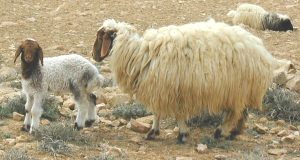
Source: All Creatures Great and Small: Living things in the Bible (UBS Helps for Translators)
Translation commentary on Leviticus 5:16
Also: Good News Translation omits this word, but it may be important to include it in the receptor language in order to make clear the two aspects of the ritual.
Make restitution: the idea of restitution in English is perhaps too strong for the Hebrew word found here (compare 6.5). The text does not indicate whether the repayment plus the additional interest should be made in kind or in money.
Shall add a fifth to it: fractions such as this are often difficult to express in some languages. Some have to say something like “one part in five” or “one piece taken from every five pieces.” Good News Translation prefers to convert the fraction into a percentage, and this may be helpful to some translators. The whole phrase may be reworded as follows: “He is obligated to give to the priest all that he owes him and add a fifth (or, twenty percent) more” or “He must pay the priest what he failed to pay and add to it a fine of a fifth (or, twenty percent).”
The priest shall make atonement …: see 4.20.
With the ram of the guilt offering: this detail indicates the means by which the atonement takes place. While it is not found in other instances of the atonement (forgiveness) formula, it emphasizes the necessity of the sacrifice and implies therefore that the repayment with interest is not adequate by itself to accomplish the ritual of forgiveness.
Quoted with permission from Péter-Contesse, René and Ellington, John. A Handbook on Leviticus. (UBS Helps for Translators). New York: UBS, 1990. For this and other handbooks for translators see here .
Leave a Reply
You must be logged in to post a comment.