Following are a number of back-translations as well as a sample translation for translators of Joshua 2:5:
Kupsabiny: “When it began to grow dark with the gate of this city being closed, they went away where I do not know which path they took. You had better follow them right away.’” (Source: Kupsabiny Back Translation)
Newari: “They went out at the time of sundown, at the time the main gate of the city closes. I do not know where they went. If you go to pursue them quickly, you will be able to catch up with them."” (Source: Newari Back Translation)
Hiligaynon: “Rahab said, ‘(It is) true that there-were men who stayed here but I do- not -know where they came-from. They left at twilight/dusk and (it was) now the time-for-closing the gate of the city. I do- not -know where they are-going, but if you (plur.) follow them right-away/without-delay, maybe you (plur.) can- still -catch them.’ (But the truth (is), Rahab hid/had-hid the two men on the roof of her house and she covered/had-covered (them) with cut-up plants flax which she was-drying/had-dried there.)” (Source: Hiligaynon Back Translation)
English: “At dusk, just before guards closed the city gate/the city gates were closed, the two men left. I do not know where they went. So, go quickly and search for them! Perhaps you may catch them!’” (Source: Translation for Translators)
Good News Translation has restructured these verses in order to put them in a logical and chronological sequence, and thus make the narrative easier for the reader to understand. Revised Standard Version follows the order of the Hebrew text: verse 4a, narrative—Rahab hides the Israelite spies; verses 4b-5, Rahab’s answer to the king’s messengers; verse 6, narrative—a more detailed description of how the two spies were hidden.
Rahab is able to save the Israelite spies by lying to the king’s messengers. Apparently the king’s men set out from Jericho in pursuit of the spies just before dark (Revised Standard Version, verse 7b), that is, before the city gate was closed for the night; there is a slight difficulty, since in verse 5 Rahab states that the two spies had left just before the gate was closed.
In verse 4 “and hidden them” (Revised Standard Version) translates a text which in Hebrew seems to mean “and hidden him” (the singular, not the plural pronominal suffix); so New English Bible has a textual footnote, but none of the other translations has one. The United Bible Societies’ (UBS) committee on the Hebrew Old Testament Text Project (Hebrew Old Testament Text Project) takes the Hebrew to mean “the woman (in fact) took the (two) men, but she hid it,” that is, she kept it a secret. It seems better to change the text to say “and she hid them”; certainly the Hebrew seems to mean “and hid him” (see Gray; Soggin refers to Gesenius-Kautzsch, Hebrew Grammar, 60.d, page 161). The Greek Old Testament has “and hid them,” an obvious attempt to make the account harmonize.
Verse 6 (see Revised Standard Version) describes how Rahab had hidden the spies; the implication seems to be that the king’s men searched the house (including the roof) and so believed her story; it is difficult to believe that they would simply have accepted her explanation without seeing for themselves if she was telling the truth.
Perhaps from a purely logical point of view, one might assume that the king’s men would have searched the house before pursuing after the spies. But this is not a necessary conclusion, especially if the men had no reason to suspect that Rahab was lying to them. Moreover, for the telling of the story the author evidently felt that immediate pursuit produced a more dramatic effect. In any case the Hebrew text does not provide grounds enough on which to conclude that the king’s men made a search of the house.
By placing verses 4-6 together Good News Translation sought to produce a text which is easier to understand; compare, for example, the Revised Standard Version. But the result is the creation of a parenthetical statement at the end of the paragraph which speaks of an event that happened prior to the events described in the first part of the paragraph. The net result will be that the average reader will face a double difficulty, both a parenthetical statement and a flashback, that is, a reference to an event which had occurred earlier. The problem may be somewhat eased, however, if the information contained in the parenthetical statement is placed first in the paragraph. This is legitimate, for the Hebrew text does not make it clear whether Rahab hid the two spies before the king’s men came for them or immediately after the arrival of the king’s men. Good News Translation apparently assumes that the action was prior to their arrival, though there is a slight bit of ambiguity about the Good News Translation text. If one assumes that she hid the men as soon as the messengers came from the king, an alternative restructuring is possible: “4-6 Rahab went up on the roof and hid the two men under some stalks of flax that she had put there. Then she said to the men who had been sent by the king, ‘Two men did come to my house….’ ”
For many readers there will be no problem regarding the closing of the city gate at sundown; for others it may be necessary to include a note indicating that this was done each night for protection. Before the city gate was closed may be rendered “before it was time to close the city gate.” But since the city gate was normally closed at sundown, it is also possible to render “They left right at sundown, just before the men of the city closed the city gate.”
I didn’t find out may be rendered “I don’t know.”
Where they were going is the equivalent of “in which direction they went.”
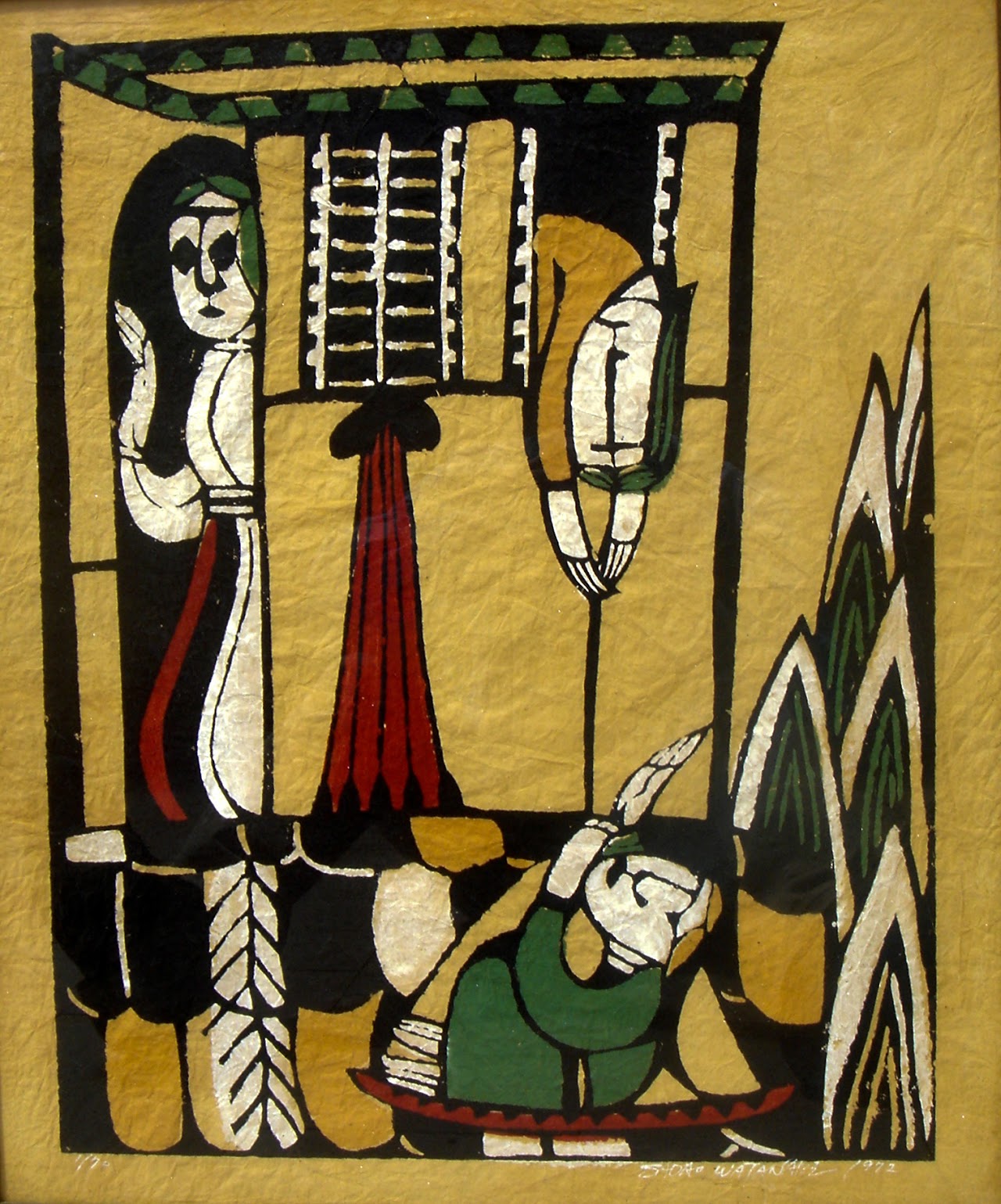
Flax is a plant from whose stem a fiber was made, to be used for weaving into linen cloth. The stalks had been laid out on the flat roof to dry out, and this may indicate that it was springtime (see 3.14-15).
Quoted with permission from Bratcher, Robert G. and Newman, Barclay M. A Handbook on Joshua. (UBS Helps for Translators). New York: UBS, 1983. For this and other handbooks for translators see here .

Leave a Reply
You must be logged in to post a comment.