
The Greek in 2 Thessalonians 3:14 that is translated as “take note (of those . . .)” in English is translated in Maan as “they put a rock in our hands.” (Source: Don Slager)
Language-specific Insights
tempted by God
The Greek in James 1:13 that is translated as “tempted by God” in English is translated in Maan as “God does not test/tempt anyone to sin.” Since there is only one Maan word for the concepts of “test” and “tempt” and since the translators felt that God could well test but not tempt, the further specification was felt to be necessary. (Source: Don Slager)
blue as the sky
In English translations, Exodus 24:10 is translated as “God stood on a platform of sapphire as blue as the sky.” The translator transliterated “sapphire,” and said the platform was “as black as the sky” since the Maan word for “blue” includes the color black also. We decided to say that the platform was the color of the sky, without specifying the color. That way a light blue color will be in view.
stork
The Hebrew that is translated as “stork” in English is translated in Maan as “big water bird,” as the stork is not locally know. (Source: Don Slager)
In the Contemporary Chichewa translation (2002/2016) with mulungu wachilendo it is translated as kakowa or “egret.” (Source: Mawu a Mulungu mu Chichewa Chalero Back Translation)
There is almost complete agreement that chasidah is the stork. There are two species of stork that pass over Israel, where they stay for a few days as they migrate from Europe to Africa and vice versa. These are the White Stork Ciconia ciconia and the Black Stork Ciconia nigra.
Both of these storks are large birds with long legs and long necks. They are heavier than most herons or cranes. The white stork has a white body, black wings, and a red beak and legs. The black stork is a glossy brownish black color with a white belly. It also has a red beak and legs. These storks migrate from central and eastern Europe to East and Central Africa, occasionally reaching Zimbabwe and parts of South Africa in good rainy seasons. Both types spend most of the time on the ground or in shallow water searching for food. The white stork eats mainly locusts, grasshoppers, and other insects, as well as frogs, lizards, and the chicks of ground-nesting birds. The black stork prefers fish and frogs but also eats the same things as the white stork.
When storks are about to move to another feeding ground, they usually soar around in upward currents of air called thermals, reaching great heights, and then they soar off in the direction they have chosen, conserving their energy by only occasionally beating their wings.
It is possible that the name chasidah is derived from the word chesed, meaning “kindness” or “faithfulness”, perhaps a reference to the fact that they seem to take especially good care of their young when nesting.
Storks of various species are found in most parts of the world, and many of them have migrating habits. There are species of stork that migrate from Europe to India and the Far East, some that migrate from Southeast Asia to Australia, and one, the Abdim’s Stork Ciconia abdimii, which migrates from Ethiopia to Zimbabwe and Botswana, signaling the arrival of the rainy season wherever it goes.
In the few areas where storks are not known, a borrowed word or a transliteration can be used, perhaps with a footnote to indicate that this is a big bird that migrates long distances over Israel.
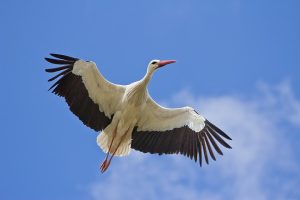

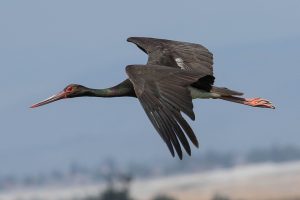
.jpg)
Source: All Creatures Great and Small: Living things in the Bible (UBS Helps for Translators)
See also snow (color).
dome
The Hebrew that is translated as “dome” or similar in English is translated in Maan as “round roof,” since there is no existing word for that concept. (Source: Don Slager)
sympathize
The Greek in Hebrews 4:15 that is translated as “sympathize” in English is translated in Maan as “to put fire in one’s heart for someone.” (Source: Don Slager)
reveal
The Greek that is translated as “reveal” in English is translated in Maan with the expression “take the leaf from it.” (Source: Don Slager)
flesh
The Hebrew that is translated as “flesh” in English and in some English versions as “muscles” (including God’s Word, Good News Translation, Contemporary English Version, NET Bible) is translated in Maan with a word that simultaneously means “flesh” and “muscles,” since “Maan does not have a separate word for muscles.” (Source: Don Slager)