The Hebrew that is transliterated as “Bathsheba” in English is translated in Spanish Sign Language with the signs for “woman” and “bath” referring to 2 Samuel 11:2. (Source: Steve Parkhurst)
The Hebrew and Latin that is transliterated as “Micah” in English is translated in Spanish Sign Language with the sign for “humility” or “obey,” referring to Micah 6:8. (Source: Steve Parkhurst)
The Hebrew, Latin, and Greek that is transliterated as “Obadiah” in English is translated in Spanish Sign Language with the sign for “mountain,” referring to Obadiah 1:16. (Source: Steve Parkhurst)
The Hebrew and Latin that is transliterated as “Amos” in English is translated in Spanish Sign Language with the sign for “renovate / renew,” particularly referring to Amos 9:11. (Source: Steve Parkhurst)
In Swiss-German Sign Language it is translated with the sign that depicts Amos’ move from the Southern Kingdom of Judah into the Northern Kingdom of Israel to prophesy against it.
Following is a Russian Orthodox icon of Amos from the 18th century (found in the Transfiguration Church, Kizhi Monastery, Karelia, Russia). The words on the scroll are extracted from Isaiah 13:6: “For the day of the Lord is near; it will come like destruction from the Almighty!”
Orthodox Icons are not drawings or creations of imagination. They are in fact writings of things not of this world. Icons can represent our Lord Jesus Christ, the Virgin Mary, and the Saints. They can also represent the Holy Trinity, Angels, the Heavenly hosts, and even events. Orthodox icons, unlike Western pictures, change the perspective and form of the image so that it is not naturalistic. This is done so that we can look beyond appearances of the world, and instead look to the spiritual truth of the holy person or event. (Source )
The Hebrew, Latin, and Greek that is transliterated as “Joel” in English is translated in Spanish Sign Language in two different ways. The first is with a sign depicting “Pentecost flame,” referring to Peter’s speech on Pentecost in which he quotes Joel in Acts 2:16 and following. (Source: Steve Parkhurst)
The Hebrew and Greek that is transliterated as “Jezebel” in English is translated in Spanish Sign Language with the sign depicting “striking serpent” representing her deceitfulness. (Source: Steve Parkhurst)
The Hebrew and Greek that is transliterated as “Sarai” and “Sarah” in English is translated in Spanish Sign Language with the sign depicting coins on a headband, referring to women from the Middle East and North Africa who wear a headband decorated with small coins. (Source: Steve Parkhurst)
The Hebrew, Latin, and Greek that is transliterated as “Hosea” in English is translated in Spanish Sign Language with the sign for “repent,” particularly referring to Hosea 6:1 – Hosea 6:3. (Source: Steve Parkhurst)
In Swiss-German Sign Language it is translated with a sign that depicts going away and returning, referring to Hosea going away and finding the prostitute Gomer to marry and then returning home with her (see Hosea 1:2 and Hosea 1:3).
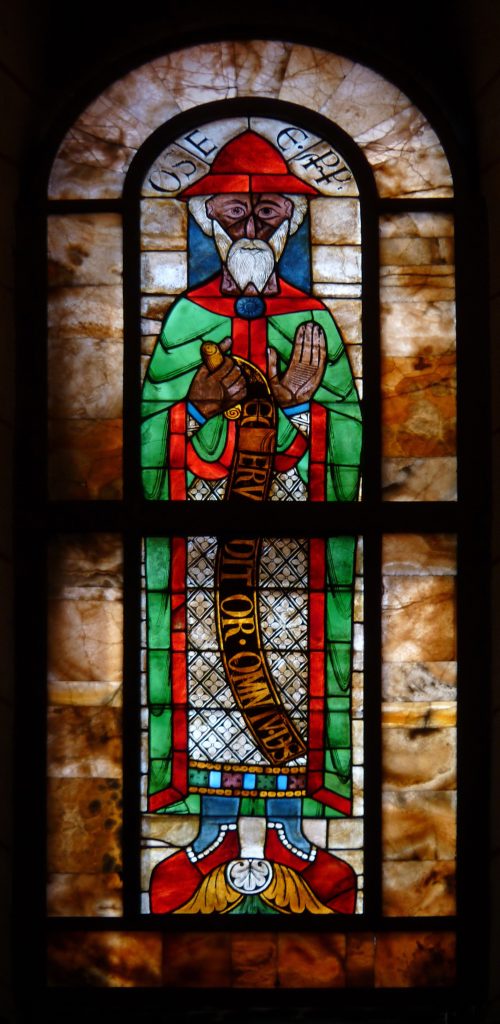
The following is a stained glass window of Hosea in the Augsburg Cathedral in Germany. It is part of the “Prophet windows of Augsburg ” from the 12th century which is assumed to be the oldest remaining set of church windows:
Photo by Hans Bernhard, hosted by Wikimedia Common under the GFDL-CC-BY-SA-all license
Stained glass is not just highly decorative, it’s a medium which has been used to express important religious messages for centuries. Literacy was not widespread in the medieval and Renaissance periods and the Church used stained glass and other artworks to teach the central beliefs of Christianity. In Gothic churches, the windows were filled with extensive narrative scenes in stained glass — like huge and colorful picture storybooks — in which worshipers could ‘read’ the stories of Christ and the saints and learn what was required for their religious salvation. (Source: Victoria and Albert Museum )