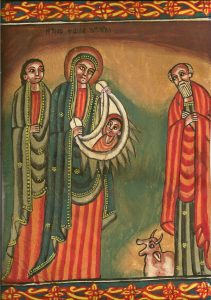
This is a contemporary tempera/gouache on leather painting by an unknown Ethiopian artist. Source: Sacred Art Pilgrim website .
Following is a painting by Chen Yuandu 陳緣督 (1902–1967):
Housed in the Société des Auxiliaires des Missions Collection – Whitworth University.
Image taken from Chinese Christian Posters . For more information on the “Ars Sacra Pekinensis” school of art, see this article , for other artworks of that school in TIPs, see here.
Following is a painting by Chen Yuandu 陳緣督 (1902-1967):
Housed in the Société des Auxiliaires des Missions Collection – Whitworth University.
Image taken from Chinese Christian Posters . For more information on the “Ars Sacra Pekinensis” school of art, see this article , for other artworks of that school in TIPs, see here.
1936 painting by Wang Suda 王肅達 (1910-1963),
Housed in the Société des Auxiliaires des Missions Collection – Whitworth University
(click image to enlarge)
Image taken from Chinese Christian Posters . For more information on the “Ars Sacra Pekinensis” school of art, see this article , for other artworks of that school in TIPs, see here.
Image taken from He Qi Art . For purchasing prints of this and other artworks by He Qi go to heqiart.com .
For other images of He Qi art works in TIPs, see here.
Following is an painting by Wang Suda 王肅達 (1910-1963):
Copyright by the Catholic University Peking, China
Text under painting translated from Literary Chinese into English: The Second Commandment
Peter swears he doesn’t know the Lord
Image taken from Chinese Christian Posters . For more information on the “Ars Sacra Pekinensis” school of art, see this article , for other artworks of that school in TIPs, see here.
Following is a painting by Chen Yuandu 陳緣督 (1902–1967):
Image is housed in the Société des Auxiliaires des Missions Collection – Whitworth University and taken from Chinese Christian Posters . For more information on the “Ars Sacra Pekinensis” school of art, see this article , for other artworks of that school in TIPs, see here.
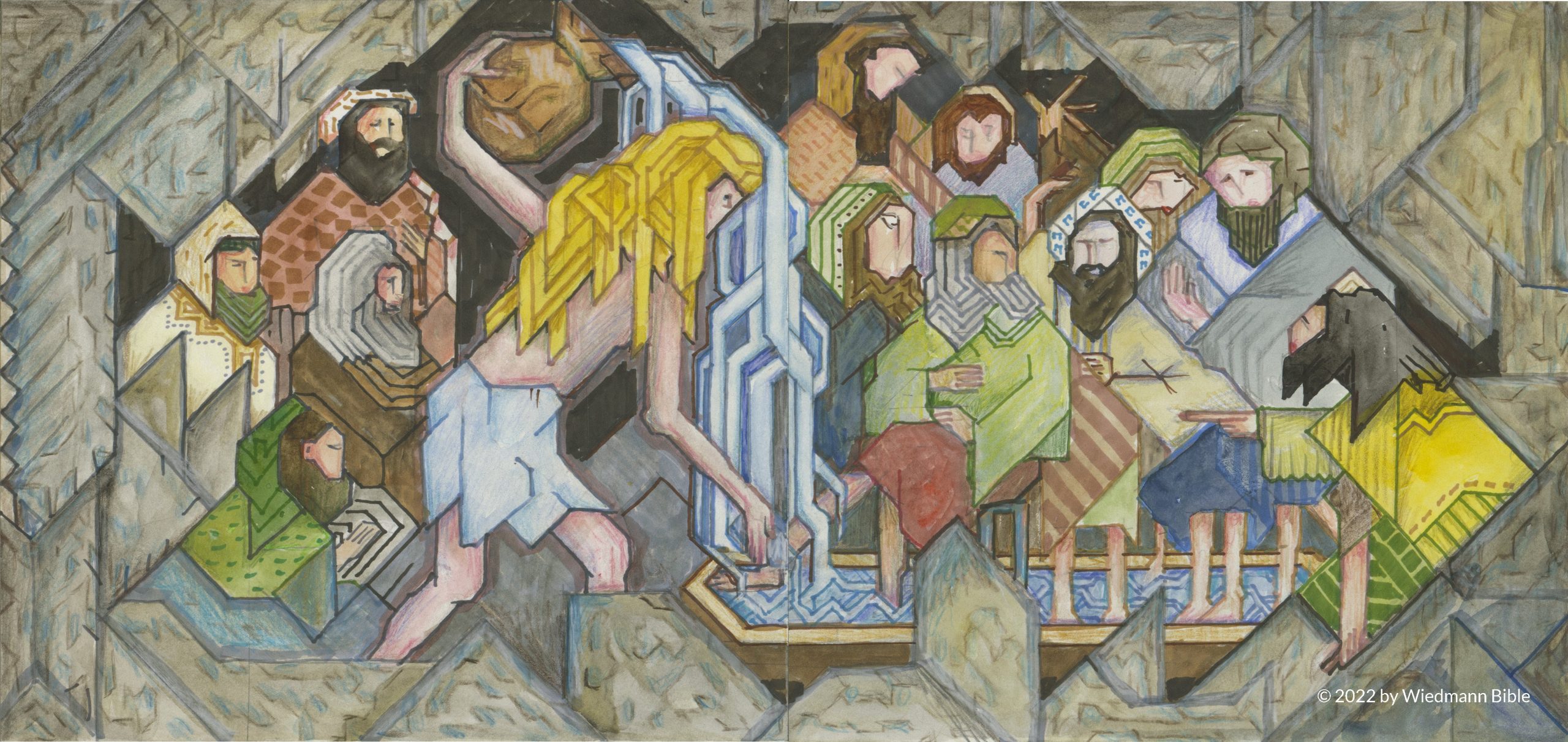
Willy Wiedmann, the artist, commented on this picture: “In spite of some difficulty, and unlike Leonardo da Vinci [see here ] I did not set my last supper in a theatrical scene with Jesus in the center behind an elongated table with all the disciples, with two at each end so that that there are 11 seated behind the table. And not like the panel by Juan de Juanes (1623-79) [see here ] in which the six disciples left and right are very dynamic figures. And also not like Martin Schongauer’s Last Supper [see here ] with a slightly shorter table (also incidentally very similar to Juanes in the attitudes of the figures) and two figures seen from the back in the foreground of the panel. Instead I have given the Master the middle place to the foreground, with his back to us to finally leave the controversial Jesus-existential questions unanswered. Slightly symbolically it means that he is leaving his world. The iris color is meant to transfer the rainbow to Jesus, that God once linked to Noah (my kingdom is not of this world). I attempted to present answers that correspond to the characters of each individual.”
Image and text taken from the Wiedmann Bible. For more information about the images and ways to adopt them, see here .
For other images of Willy Wiedmann paintings in TIPs, see here.
Painting by Wang Suda 王肅達 (1910-1963),
Copyright by the Catholic University Peking, China.
Text under painting translated from Literary Chinese into English:
Beginning of the Holy Communion
You have this as food and this is my body.
Image taken from Chinese Christian Posters . For more information on the “Ars Sacra Pekinensis” school of art, see this article , for other artworks of that school in TIPs, see here.